Deck Repair vs Replacement in the Poconos: When to Fix and When to Rebuild
The harsh winters of the Poconos take a significant toll on everything outdoors, particularly your deck. Even if it made it through the season, shaky railings or soft wood are clear warning signs that something isn’t quite right. Choosing between a simple fix or a total overhaul can be stressful, but getting it right is the best way to avoid unnecessary expenses and headaches.
In this article, we'll look at why decks wear out faster in NE Pennsylvania, the warning signs that separate a quick fix from a structural problem, and how to use real 2026 costs to make the repair or replace call with confidence.
Why Poconos Winters Are So Hard on Decks
Decks in our region work harder than decks almost anywhere else. Every winter brings dozens of freeze-thaw cycles that force moisture into wood fibers, expand it as ice, and pry boards and fasteners apart a little more each time.
Frost is the other quiet enemy. The frost line in NE Pennsylvania sits around four feet down, and footers that were not poured to that depth can heave and shift, throwing the whole structure out of level.
Add heavy snow load sitting on the frame for weeks and constant moisture from tree cover, and a 15-year-old Pocono deck has often lived a 25-year life. That's why our team builds with these conditions in mind, as we covered in our guide to custom deck building in NE Pennsylvania.
Warning Signs: What Your Deck Is Telling You
Not every flaw means the deck is done. The skill is in telling cosmetic wear apart from structural failure, and your deck gives you clues for both.
Fixable Problems: Boards, Railings, and Surface Wear
Some issues look alarming but live entirely on the surface. A handful of cracked or cupped boards, a loose railing section, popped nails, or faded finish are all repairable without touching the structure underneath.
Isolated soft spots can also be fine, as long as the rot has not spread into the framing. If a screwdriver sinks into one board but the joist below it feels solid, a board swap and a fresh seal usually solve it.
Deal Breakers: Ledger Failure, Joist Rot, and Shifting Footers
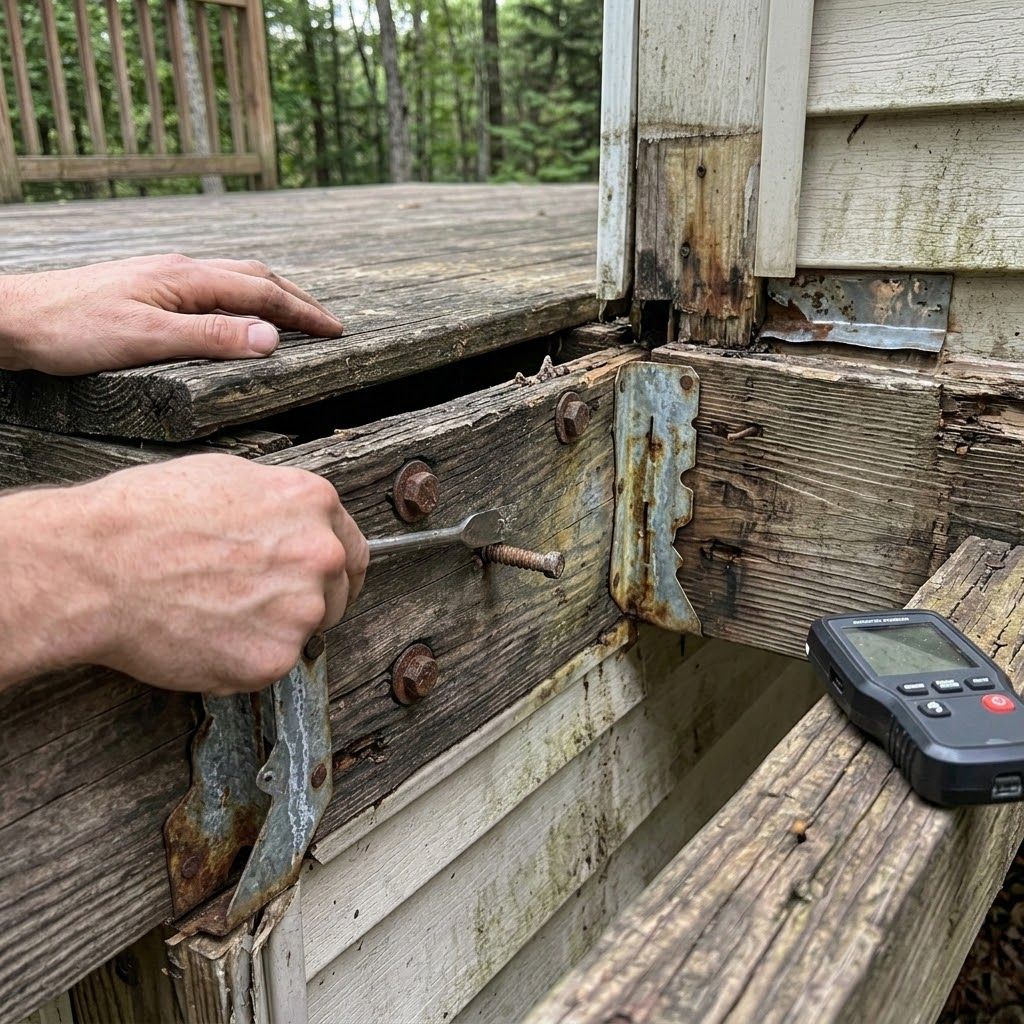
The ledger board is where the deck attaches to your house, and it's the most dangerous place to find rot or pulling fasteners. Ledger failure is behind many deck collapses, and it is rarely worth patching.
Widespread joist rot, posts that have softened at the base, and footers that have heaved out of position are also replacement territory. When the skeleton is compromised, new boards on top only hide the problem.
Repair or Replace? A Side-by-Side Look
| Usually Repairable | Usually Means Replacement |
|---|---|
| A few cracked, cupped, or splintered boards | Rot or pulling fasteners at the ledger board |
| One loose or wobbly railing section | Soft, spongy framing across multiple joists |
| Popped nails and loose screws | Posts rotted at the base or footers that have heaved |
| Faded stain or peeling finish | The deck visibly sagging or pulling away from the house |
| Isolated soft spots with solid framing below | Repair quotes approaching half the cost of a new deck |
What Deck Repair Costs in 2026
Most deck repairs land in a manageable range. According to LawnLove's 2026 cost data, the average deck repair runs about $1,465, with most projects falling between $570 and $2,600 depending on the damage and material.
More involved fixes climb from there. Angi reports an average professional repair around $2,237, with materials running $3 to $45 per square foot based on your decking type.
In the Poconos, plan toward the higher end if your repair involves footers or framing. Frost-depth excavation and structural lumber cost more than swapping surface boards.
When Replacement Is the Smarter Investment
A full rebuild costs more upfront, with Angi placing new deck construction between $4,500 and $18,000 for most projects. But when structural damage is widespread, replacement is often cheaper than chasing repairs year after year.
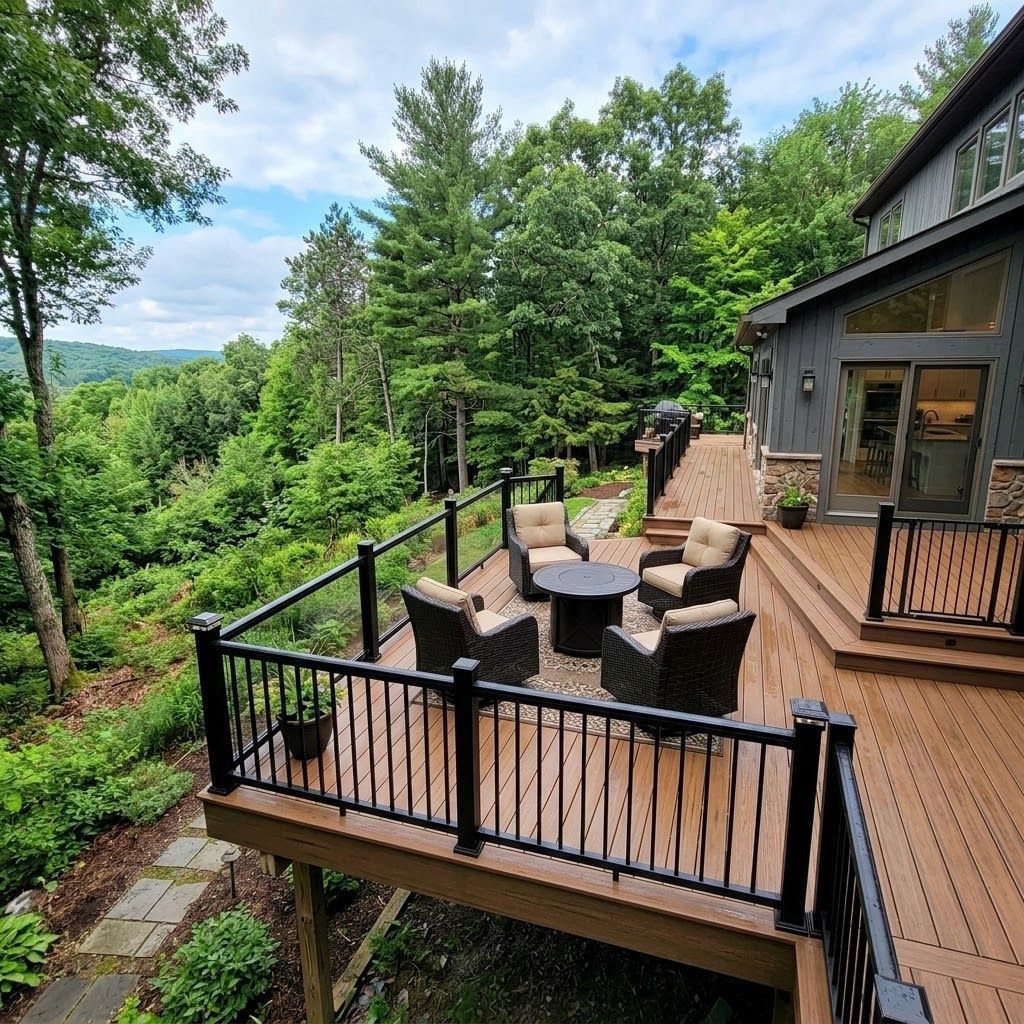
A rebuild also resets the clock with better materials. Modern composite decking shrugs off the moisture and freeze-thaw cycles that destroyed your original wood deck, and code-compliant footers poured below the frost line stay put.
For vacation rental owners, the math gets even friendlier. A safe, attractive deck is one of the upgrades that helps Pocono short-term rentals earn more per night, and guests notice outdoor spaces in photos before anything else.
The 50% Rule: A Simple Way to Decide
When you have quotes in hand, one guideline cuts through the noise. As Angi's composite decking guide explains, if repairs will cost around half of what a full replacement would, rebuilding is usually the smarter spend.
The logic is simple. A $6,000 repair on a deck that costs $12,000 to replace still leaves you with old framing, old footers, and a structure that will need more work soon. The same money toward a rebuild buys decades.
And the upfront number doesn't have to land all at once. Our Buy Now, Pay Later financing options let you spread a rebuild into payments that fit your budget.
Get an Honest Deck Evaluation From Home Source Remodeling
The repair or replace question deserves a straight answer, not a sales pitch. Home Source Remodeling has served the Poconos since 1998, and our team will tell you when a repair genuinely solves the problem and when it would only delay the inevitable.
We'll inspect the ledger, framing, and footers, walk you through what we find, and give you clear numbers for both paths. Browse our project gallery to see recent rebuilds, then schedule your free consultation before the next winter takes another bite out of your deck.